
Brian Lesser & Buzz Hays on the Magic Behind Architecting Brand Communities
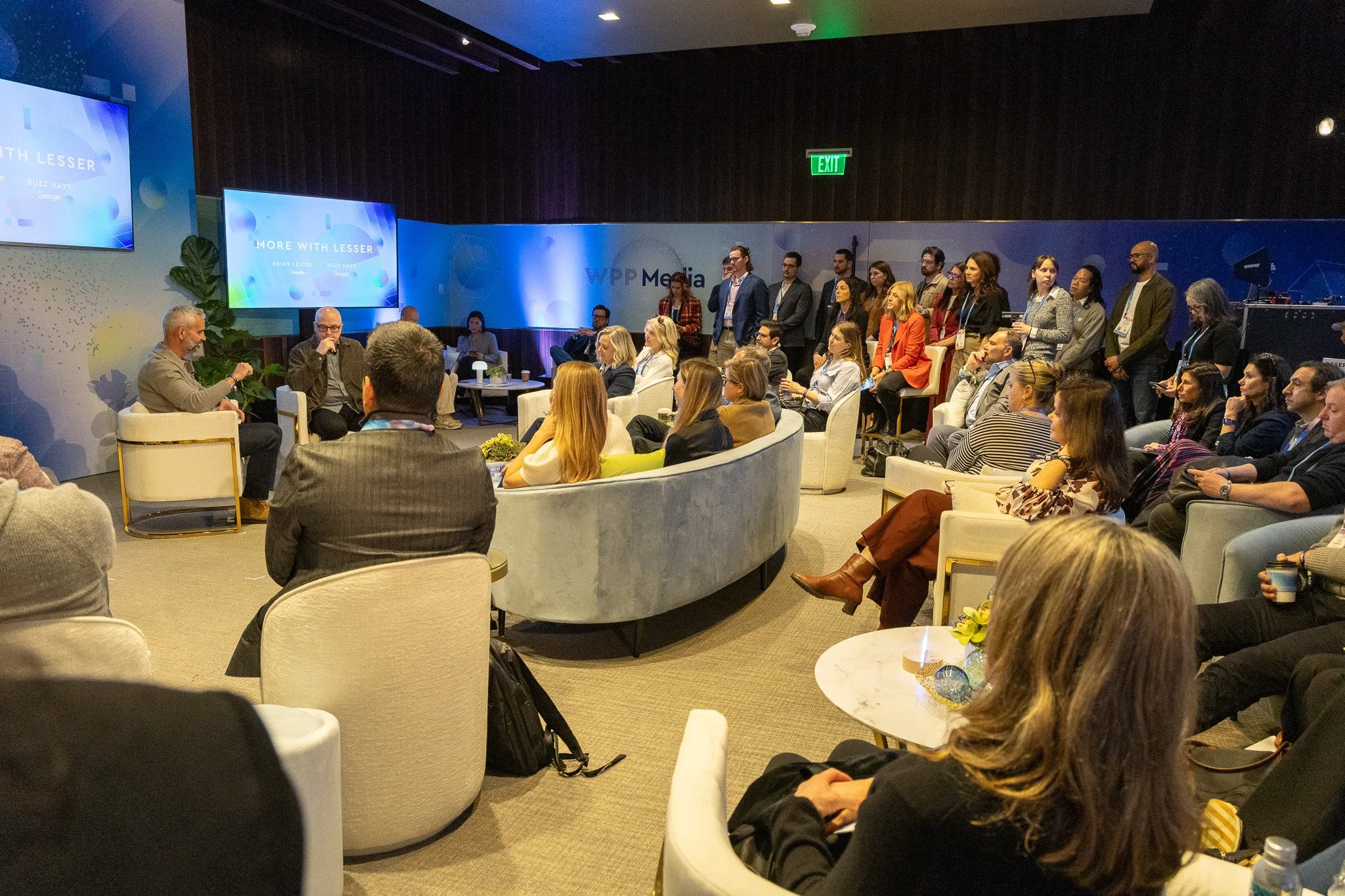
Brian Lesser and Buzz Hays in the WPP Media Lounge. (Photo: Giuseppe DeAngelis)
Media fragmentation, changing consumer habits, technological advancements that seem to speed up on an exponential scale. Marketers are familiar with the refrain.
But “despite challenges reaching consumers, there's no better time to be in marketing,” said WPP Media Global CEO Brian Lesser during a session for clients at the WPP Media Lounge during CES 2026.
The session, which also included a conversation with Buzz Hays, Google Cloud’s Global Market Lead for the Entertainment Industry, repeatedly seemed to echo sci-fi great Arthur C. Clarke’s “Three Laws.”
Media Magic
Clarke’s third (and most famous law) states that “any sufficiently advanced technology is indistinguishable from magic.”
Recent advances in artificial intelligence and data technology are key factors in making this the best of times for marketers — or at least those willing to embrace the new media magic.
“The outcomes media drives for brands feel magical: record-breaking campaigns, unprecedented ROI, viral cultural moments,” said Lesser. “But it's not illusion, it's imagination powered by intelligence. Data, technology, and creativity working in perfect concert.”
Lesser offered WPP Media’s own three principles to architect growth in the AI-powered economy.
Put Data at the Core: Data and technology powers better media, production, creative, content, and outcomes.
Fuel Creative with Media: Media is everywhere. It is now the creative canvas. Media isn’t just a distribution channel for creative. It literally redefines how brands connect.
Learn Fast, Build Faster: Marketers and their agency partners need to build worlds that are enduring, evergreen, endless — not fast, fleeting, finite. And they need to do this with AI and media at the center of their efforts.
Master architects
Brands, said Lesser, need to start thinking like master architects.
“While some agencies focus on static environments and isolated campaigns, we're architecting living, breathing brand communities,” he said.
“Media isn't just the megaphone — it's the muse,” Lesser added. “When you fuel creative with media intelligence, you don't just reach people — you move them.”
The wizards behind Oz
Lesser’s conversation with Buzz Hays, a former Hollywood producer, and one of the architects of the current version of The Wizard of Oz running at the Sphere in Las Vegas, brought to mind Clarke’s other two laws. The first is that “When a distinguished but elderly scientist states that something is possible, he is almost certainly right. When he states that something is impossible, he is very probably wrong.” The second is that “The only way of discovering the limits of the possible is to venture a little way past them into the impossible.”
Hays’ account of bringing The Wizard of Oz from idea to reality was an encapsulation of both of those things. The technology didn’t seem to exist. It couldn’t be created. But it was created, despite all the technical challenges — and the psychological ones as well.
“What’s interesting about this particular project is that we were messing with the Mona Lisa,” said Hays, referring to a movie adored since its debut in 1939. But the original directors of The Wizard of Oz were technophiles themselves. It was only the third movie to be shot in Technicolor.
One of the biggest hurdles, he added was “It’s really difficult to get past the fact that nobody wants to be the first to fall on their face.”
Clearly, they got the job done. The Sphere’s version The Wizard of Oz made its debut in August of 2025 and was profitable before Christmas.
One of the main takeaways from a massive creative project that had sometimes resistant artists working with the most cutting-edge AI? Make the tech work for humans, not the other way around.
“They need a tool that fits the way they work, not a new thing that they have to learn,” said Hays.