
Worldbuilding: Foundations
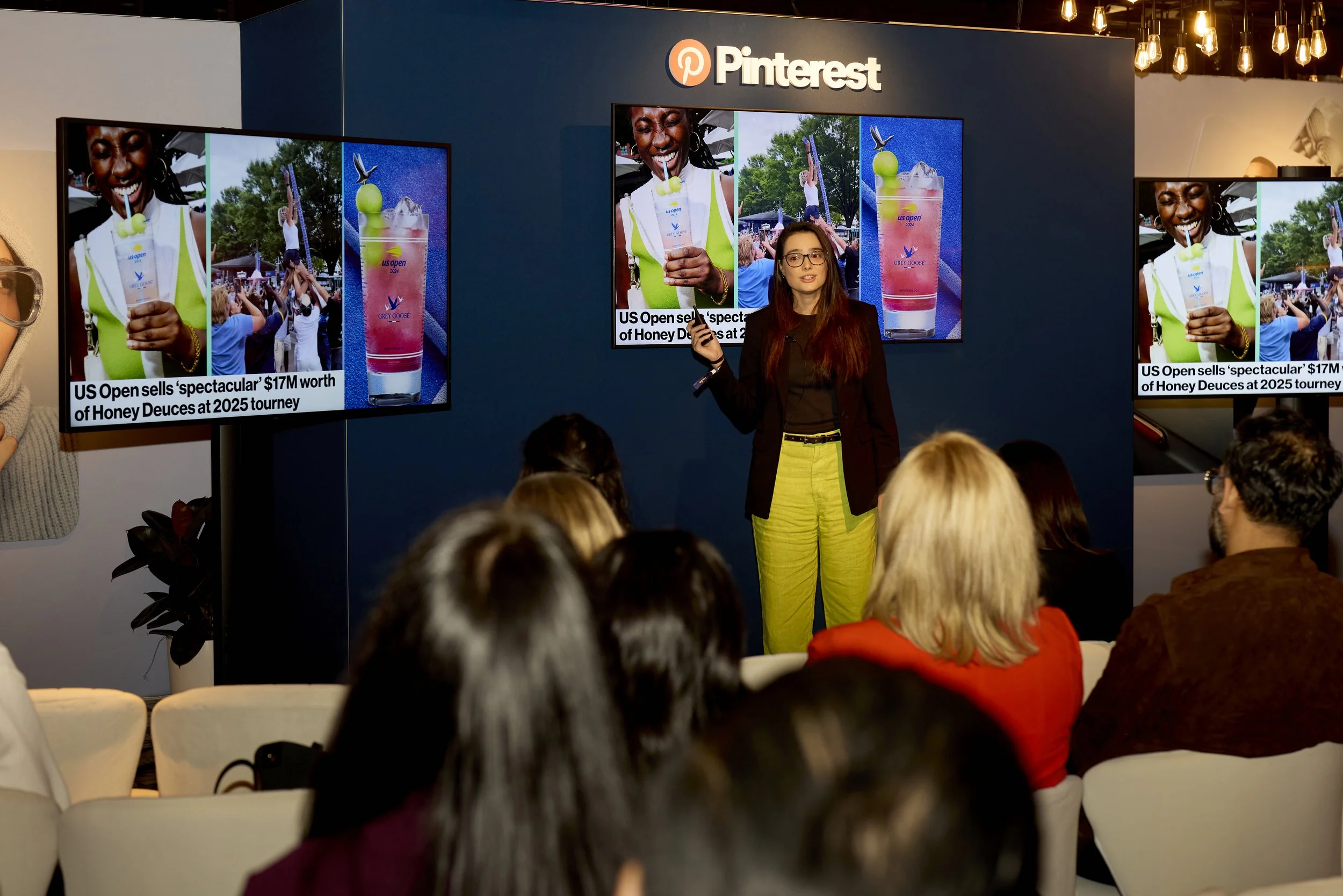
Isabela Albero, Managing Director of Global Strategy, WPP Media on the convergence of social and shopping. (Source: Pinterest)
Architecture requires foundations, according to WPP Media Chief Strategy Officer Joe Maceda. But thanks to the breakneck pace of change brought about by artificial intelligence, “it feels like the foundations under us are feeling a little unstable. … What are brands to do when we don’t know what the foundation is under us?”
That’s where Worldbuilding comes in.
Worldbuilding is an approach to marketing that finds the intersection of Community, Culture, and Commerce to get beyond fleeting, one-time campaigns and create efforts that truly connect with consumers on their terms.
To do that, brands need to lean into what makes us human: storytelling, creating, sharing, and learning
Those traits underpinned the four chapters of this year’s Worldbuilding presentation, focused on Foundations:
In Media Res: The idea that brands need to be more flexible and place themselves at the center of wider stories. “It’s no longer about the one perfect story. It’s about mosaic story telling,” said Christina Gregory, Head of Strategy at WPP Unite.
Creation Core: Thanks to technology, more and more people — from paid creators to hobbyists — are making creation part of their identity. “People are creating new ways to participate with their fandom,” said Kelly Garland, Executive Director of Strategic Innovation, WPP Media.
The New Agora: Shopping and social are increasingly intertwined. “Every single element of the purchase journey is or has the potential to become social,” said Isabela Albero, Managing Director of Global Strategy, WPP Media.
IYKYK: As AI upends online search, everybody wants in on what feels like a second chance to win the information war on the internet. But, said Maceda, “if we focus too much on the technical and content needs, we might miss a more important point. The utilization of AI is the most impactful development on human knowledge since the written word. It’s a change of our relationship with knowledge in general.” Ultimately, if consumers outsource decision-making and rational understanding, the only way to create true differentiation is through experience.
At the start of the presentation, Maceda noted that a lot of Worldbuilding raises as many questions as answers. But for brands looking for three steps to get started, he provided a simplified summary.
Tell stories through many entry points
Enable co-creation by finding white spaces
Treat every part of the shopping journey as a social trigger
Note: Clients interested in learning more about Worldbuilding should reach out to their client leads.