
Know Before You Go
SXSW has always been a reliable barometer of where culture and technology are heading, but the 2026 conference arrives at an unusual inflection point. AI has moved from speculative capability to operational reality after years of uneven advancement and functionality. The U.S. creator economy crossed $37 billion in spending in 2025 and fundamentally reorganized how brands reach audiences. Traditional search lost meaningful ground to conversational AI, and with it, the discovery infrastructure that governed digital marketing for two decades began to crack. Fandom — once treated as a demographic curiosity — demonstrated measurable commercial returns that made it impossible to ignore. The compounding effect of these shifts isn't theoretical. It's the environment every brand is operating in right now.
Our guide focuses on four areas where those shifts have been most acute and where the stakes for marketers are highest in 2026. First, how AI is reorganizing not just workflows but cognitive work itself, and what that means for how agencies and brands build capability and retain expertise. Second, how the creator economy has matured past transactional partnerships into a model built on world-building and community, requiring a fundamentally different strategy. Third, how fandom has evolved from cultural observation into commercial infrastructure, with proven ROI that makes deep community investment a performance play, not just a values play. Fourth, how attention and discovery have fragmented across platforms and formats in ways that make traditional reach metrics increasingly unreliable as predictors of business outcomes. These four themes are expressions of the same underlying pressure: the old models are breaking faster than the new ones are stabilizing.
Whether you're spending the week in Austin or not, this guide is designed to help you navigate the best of SXSW with focus. "Hot Topics" section is meant to be read before you arrive, not as a briefing on what to expect but as a lens for what to listen for. "What's Happening" covers the events, panels, and experiences worth your time, with enough context to decide what fits your priorities. Whatever path you take, the most valuable conversations at SXSW rarely happen on stage. They happen when you walk into the right room already knowing which questions matter.
Hot Topics
-
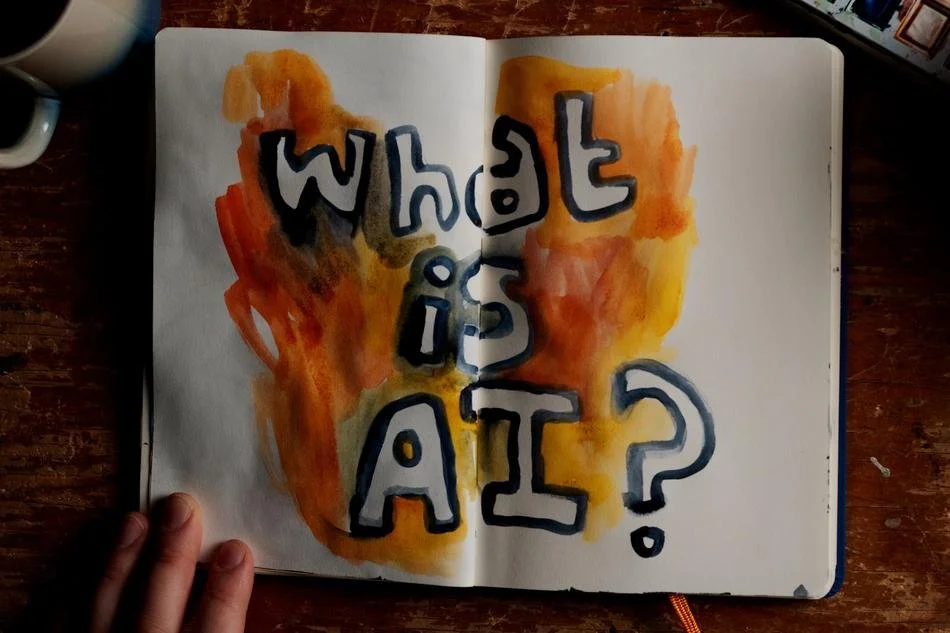
The evidence is no longer speculative: Heavy AI use is measurably degrading independent analytical ability. A 2025 study found a strong negative correlation between frequent AI tool usage and critical thinking skills, mediated by what researchers call cognitive offloading — the habitual delegation of reasoning tasks to machines. MIT researchers went further, using brain-activity monitoring to measure cognitive engagement during essay writing where participants were divided into groups using a Large Language Model (LLM), a search engine, or nothing at all. Those using an LLM showed signs of under-engagement compared to those using search engines or no thing, often struggling to quote their own work. Without guidance, AI can allow users to bypass the reasoning step entirely, not just the memory step. If thinking is a muscle, widespread AI reliance may be atrophying it.
The organizational stakes are just as real. AI is reorganizing work at the structural level, moving from automating repetitive tasks to automating reasoning, analysis, and creative judgment itself. The optimistic case has AI handling routine work and freeing cognitive resources for more complex tasks. That assumption requires guidance and intention. Younger workers show higher AI dependence and weaker critical thinking scores in recent studies, which has direct implications for how organizations onboard, train, and develop talent in an AI-saturated environment.
The distinction that matters is augmentation versus abdication. Augmentation means AI sharpens your thinking. Abdication means AI replaces it. Moderate AI use has been shown to have positive cognitive impact — the issue is balance and intentionality, not avoidance. Organizations that build cultures distinguishing between the two will produce better work and develop stronger people.
The competitive advantage in a world where everyone has access to the same AI tools isn't the tools. It's the quality of human judgment applied to the output. That judgment is a trainable, protectable asset, but only if organizations treat it as one. SXSW 2026's programming puts it plainly: the sessions aren't asking whether AI is powerful, they're asking how to protect human creativity. That's the right question, and it's now a strategic one, not just a philosophical one.
What to See:
AI & the Brain: As We Embrace AI, Let's Not Forget Our Minds
March 12 | 10 a.m.
What happens to your brain when you stop doing the thinking? A look at the cognitive and neurological costs of habitual AI reliance.
The Learning Geeks: How to Think When Machines Think Faster
March 12 | 11:30 a.m.
Speed isn't the same as insight — learn practical strategies for maintaining critical thinking when AI generates answers faster than you can reason through problems.
AI, Your Brain & the Battle for Cognitive Sovereignty
March 17 | 2:30 p.m.
Who controls your thinking when the tools you rely on are doing the reasoning for you? New research on cognitive offloading explores what it means for intellectual autonomy. -
The creator economy crossed $37 billion in U.S. spending in 2025, growing four times faster than the broader media industry, yet most brand strategies haven't fundamentally changed how they approach creator relationships. Nearly half of marketers now identify creator content as a "must have," but the infrastructure hasn't kept pace with the investment. Platform dependency remains acute, regulatory gaps around disclosure persist, and over-scripted brand briefs continue to be one of the most persistent complaints from creators themselves. The tension is structural: The money has moved decisively, but the strategic thinking sometimes hasn't followed. In 2025, the gap between investment scale and partnership sophistication became impossible to ignore.
The most important creative shift of the past year wasn't a new format or platform — it was world-building. Creators began extending their influence beyond the screen, building experiences that audiences could step into offline. Netflix launched immersive Stranger Things and Squid Game activations. MrBeast opened Beast Land, turning YouTube IP into a real-world attraction. Large creators converted online audiences into live events, tours, and physical spaces, offline extensions that reinforced trust and loyalty in ways algorithms can't replicate. Audiences weren't just looking for more content. They were looking for connection. The brands and creators that understood the difference built something durable; those that didn't just generated more noise.
Platform dependency is the single biggest strategic risk in creator marketing — and world-building is the answer. The most successful creators and brands now understand the importance of real-world interactions and the lasting impact of sharing that journey with their audience. Alternative creator channels like Substack and Beehiiv are generating real interest as brands seek to balance out snackable video strategies — diversification away from a single platform is now an active editorial and business strategy, not just a hedge. The new standard for measuring creator impact is value, velocity, and voice: what fans receive beyond the runtime, the speed at which content and feedback spread, and the trusted authority creators hold within specific niches. Impressions alone are a legacy metric.
The brands that thrive will treat creators as cultural partners, not distribution channels. Long-term relationships embed brands inside the communities that influence modern consumer behavior, increasing trust, reducing ad fatigue, and generating advocacy that compounds over time. Chemistry between creator and brand isn't something you manufacture — it emerges when the relationship is genuinely right, when the creator's interests, values, and world already fit the story being told. World-building doesn't require massive budgets or spectacle. It can be as simple as a workshop, a small meetup, or creating spaces where people connect with each other rather than just with the brand. The agency role in this model is to identify where a brand's world and a creator's world genuinely overlap — and build from that intersection outward, rather than backwards from a media plan.
What to See:
FEATURED: Forget Moments Marketing: Welcome to Worldbuilding
March 13 | 10am
WPP President of Strategy and Solutions Ben Kay sits down with Unilever CMO Leandro Barreto to talk about why the best marketers aren't chasing virality anymore — they're building universes people want to live in, online and off.

A Conversation with Jack Conte
March 15 | 4 p.m.
Patreon's founder asks what happens when creators stop needing platforms and start owning their relationships with fans directly.

Enough with the Bullsh*t: BuzzFeed Founder Shares His Plan to Make the Internet Fun Again
March 13 | 4 p.m.
Jonah Peretti thinks the internet broke — and he's using AI-powered experiences to create shared cultural moments that bring it back. -
Nobody is loyal to a bank because they have a nice logo. Nobody loves a hotel chain because the pillows are soft. People are obsessively, irrationally, financially loyal to the artists, gamers, and teams they love. According to Deloitte research[KW1] , nearly 75% of adults identify as fans of something, and 70% are more likely to purchase from brands that offer personalized experiences connected to their fandom. Brand fandom, built on presence, relevance, and distinction, is now a measurable equity model. The brands that score highest have earned genuine emotional loyalty in a fragmented attention environment where that loyalty is increasingly rare and increasingly valuable.
This year’s Winter Olympics averaged 23.5 million total viewers across all platforms, up from Beijing 2022, with streaming on Peacock hitting 16.7 billion viewing minutes over 17 days. The U.S. Men's Hockey Gold Medal game drew 18.6 million viewers live, peaking at 26 million in overtime — the third-most-watched hockey game in U.S. history. Most significantly, the U.S. Women's Hockey team's gold medal win drew 5.3 million viewers, making it the most-watched women's hockey game of all time. The Super Bowl, despite a low-scoring game, still became the second-most watched TV program in U.S. history with 121.6 million viewers, while the Spanish-language broadcast set records with 3.3 million viewers — proof that major sports moments remain one of the few guaranteed attention environments left in fragmented media.
Women's sports continue their commercial ascent in 2026, with brands adding players and leagues to their rosters — and critically, this space has not yet been oversaturated by legacy sponsors or decades of cynical marketing. The "Everyone Watches Women's Sports" movement has driven women's share of sports coverage to 20%, and events like Athlos NYC drew 4.5 million viewers in year two, secured 16 brand partners, and doubled revenue. Athletes are becoming their own media companies, with the podcast boom hitting women's sports in 2025. In 2026, athlete-generated media will begin to rival traditional coverage.
The brands converting fandom into commercial outcomes have figured out enablement, not just sponsorship. Red Bull built training centers and funded documentaries around gaming. American Express created presale access structures. Marriott turned loyalty points into once-in-a-lifetime fandom experiences, making the functional act of booking a hotel emotionally high-stakes when it unlocked backstage access. The shift from reach to fan value is becoming a defining measurement conversation — consistent engagement, merchandise investment, and content participation are better indicators of genuine community membership than a single high-spend moment.
83% of consumers say brands should facilitate connections between people, and nearly 40% trust micro-community recommendations as much as personal ones. The biggest opportunity in 2026 lies in elevating the fan experience through friction removal, personalized connection points, and immersive touchpoints that compound loyalty over time. A sponsor shows up at the event; an enabler makes the event possible. The difference in how communities remember those two roles is the difference between a logo and a legacy. The agency's role is to identify where a client's brand purpose and a community's genuine passion intersect, and build the infrastructure that makes that intersection permanent.
What to See:
The Fandom Force: How to Create a Fan-First Social Approach
March 13 | 10 a.m.
What if loyalty mattered more than reach? A practical look at how depth of community investment outperforms breadth of exposure.The New Arena: How Sports, Fans & Culture Are Evolving
March 14 | 11:30 a.m.
The game hasn't changed, but everything around it has — how fandom is reshaping the commercial infrastructure of sports.The Future of Streaming in the Superfan Era
March 15 | 4 p.m.
Platforms are betting on obsession over scale, and the data is proving them right. -
Gartner predicted that by 2026, traditional search engine volume would drop 25% as generative AI becomes a substitute answer engine, and that prediction is now arriving on schedule. Between June 2024 and September 2025, organic search click-through rates fell 61% and paid search CTR fell 68% on queries where AI Overviews appeared. Daily AI search users in the U.S. rose from 14% in February 2025 to 29.2% by August — a doubling in six months. One strategist put it plainly: "If a brand isn't mentioned or cited in that instant AI answer, it effectively doesn't exist." The channel that defined digital marketing for two decades is being restructured around a logic that most current strategies weren't designed for.
Attention itself has changed; not just where it lives, but how it works. Americans now spend an average of 13 hours a day engaging with media, often across devices simultaneously. Programming executives are reportedly telling writers to assume viewers will be on two screens at once. The question for brands is no longer whether you can reach someone; it's whether you can hold them. Research from Teads and Lumen shows a direct correlation between attention duration and brand outcomes — at least 9 seconds of attention are needed to impact brand consideration and 8 seconds to influence purchase intent. Yet around 85% of online ads don't pass the 2.5-second attention-memory threshold, the critical point at which a brand begins to embed itself in memory at all. The marginal value of attention quality is dramatically higher than the marginal value of reach.
ChatGPT isn't replacing Google; it's expanding how people seek information. Users adopt a multi-modal approach, switching between AI assistants and search engines depending on intent and context. Half of consumers now intentionally seek out AI-powered search engines, with a majority saying it's their top digital source for buying decisions — yet traditional search hasn't collapsed. What's changed is that decision-making now happens across more surfaces, earlier in the journey, before the click that used to be the first measurable moment. The divergence between AI and traditional search citation ecosystems is striking: 80% of sources cited in AI search platforms don't appear in Google's traditional results, and only 12% match Google's top 10. Just 16% of brands today systematically track AI search performance — meaning most brands have an invisible presence problem they aren't even measuring.
The optimization conversation needs to shift from "how do we reach more people" to "how do we hold the people we reach." That requires different creative strategies, different channel decisions, and different measurement frameworks. Social has become a full-funnel channel: Nearly one in three consumers now use it to both discover and buy products, and the entire customer journey from awareness to conversion can happen inside a single app. The implication for media planning is significant. A smaller audience holding genuine attention and trust is more valuable than a large audience that scrolls past. The goal is to be unmissable where it counts.
What to See:
Is Search Totally Fked? What Do We Do Now?
March 14 | 10 a.m.
A blunt assessment of the search disruption underway and what marketers need to be doing differently right now.The Brain Science of Getting and Keeping Attention
March 16 | 11:30 a.m.
Most ads are forgotten before they're even remembered — neuroscience-backed insights show how sustained attention actually drives brand outcomes.When AI Shops for You
March 13 | 11:30 a.m.
If your customers never see your website, do you still exist? How AI-powered discovery is restructuring the customer journey from the ground up.
What's Happening
Stories Worth Seeing
Where Ideas Take Shape
Where creativity meets clarity, and vision meets action.
We believe in doing things differently—with intention, with passion, and with people at the center of it all. Every detail here reflects that mindset.
It All
Begins Here
We bring creativity and expertise to everything we do.
Here, creativity meets opportunity. Whatever you're building, we're here to help you take the first step with confidence.
It All
Begins Here
We bring creativity and expertise to everything we do.
Here, creativity meets opportunity. Whatever you're building, we're here to help you take the first step with confidence.
It All
Begins Here
We bring creativity and expertise to everything we do.
Here, creativity meets opportunity. Whatever you're building, we're here to help you take the first step with confidence.
It All
Begins Here
We bring creativity and expertise to everything we do.
Here, creativity meets opportunity. Whatever you're building, we're here to help you take the first step with confidence.
It All
Begins Here
We bring creativity and expertise to everything we do.
Here, creativity meets opportunity. Whatever you're building, we're here to help you take the first step with confidence.
It All
Begins Here
We bring creativity and expertise to everything we do.
Here, creativity meets opportunity. Whatever you're building, we're here to help you take the first step with confidence.
It All
Begins Here
We bring creativity and expertise to everything we do.
Here, creativity meets opportunity. Whatever you're building, we're here to help you take the first step with confidence.
2026
Ausitin
WPP Media Event →
Hosted event callout